

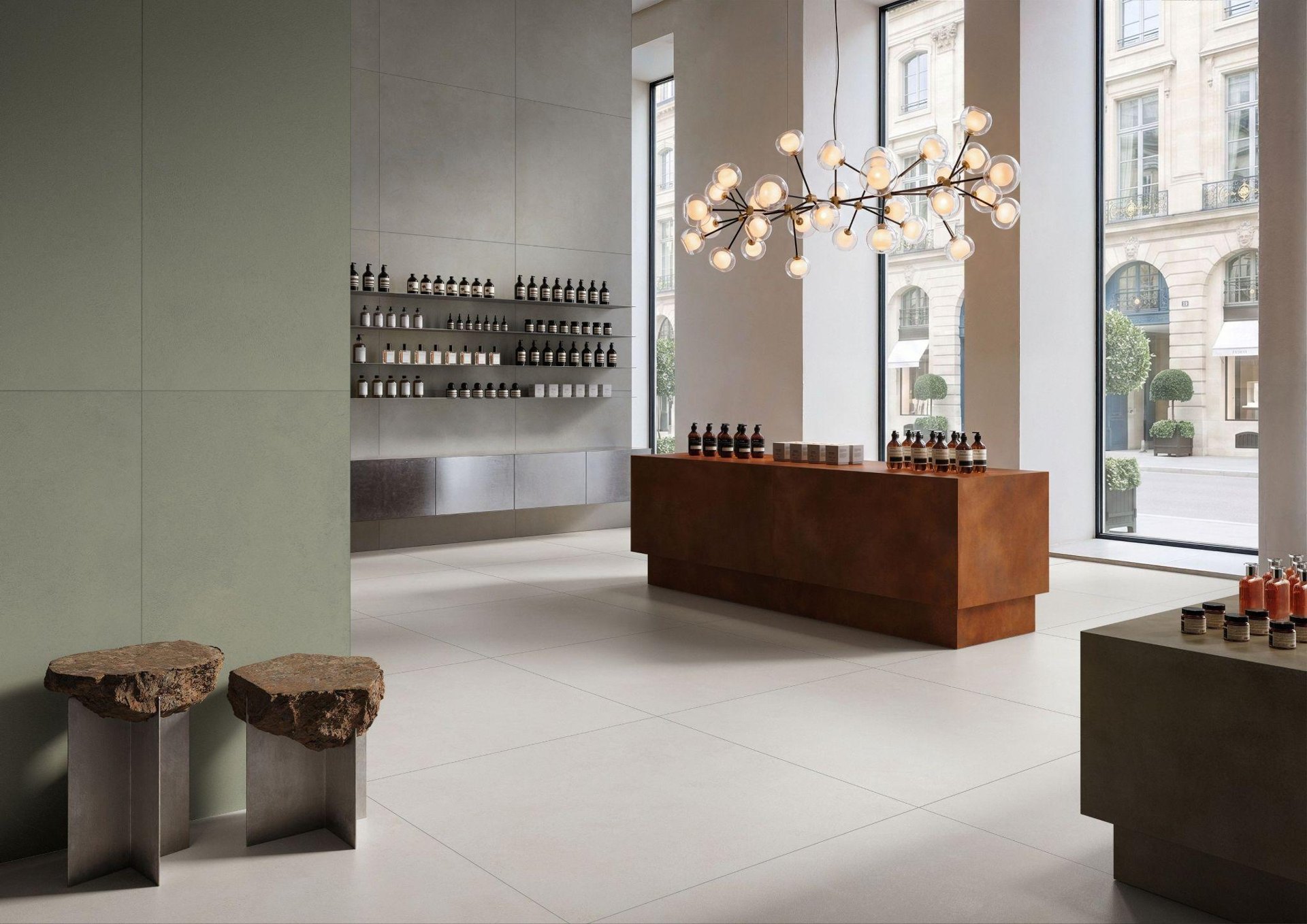

Industry professionals who visited Cersaie 2026 got a look at The Code concept and a handful of innovations from VitrA Tiles, all shaped by its Material Intelligence thinking.
Bologna, Italy: VitrA Tiles was at Cersaie 2026, the big international show for ceramic tiles and bathroom furnishings, held in Bologna, Italy from September 21 to 25. On its stand, the company welcomed architects, designers, customers and people from across the trade. With everything built on the Material Intelligence idea, VitrA Tiles put its 2027 collections and innovations on show.
“Every material has a code. Material Intelligence deciphers it.” That line sums up how VitrA Tiles thinks about design: it takes materials found in nature and gives them a fresh reading, mixing research, design know-how and advanced technology. Building on the beauty and technical promise of nature, the company turns those materials into original surfaces that hand contemporary architecture new ideas to work with.
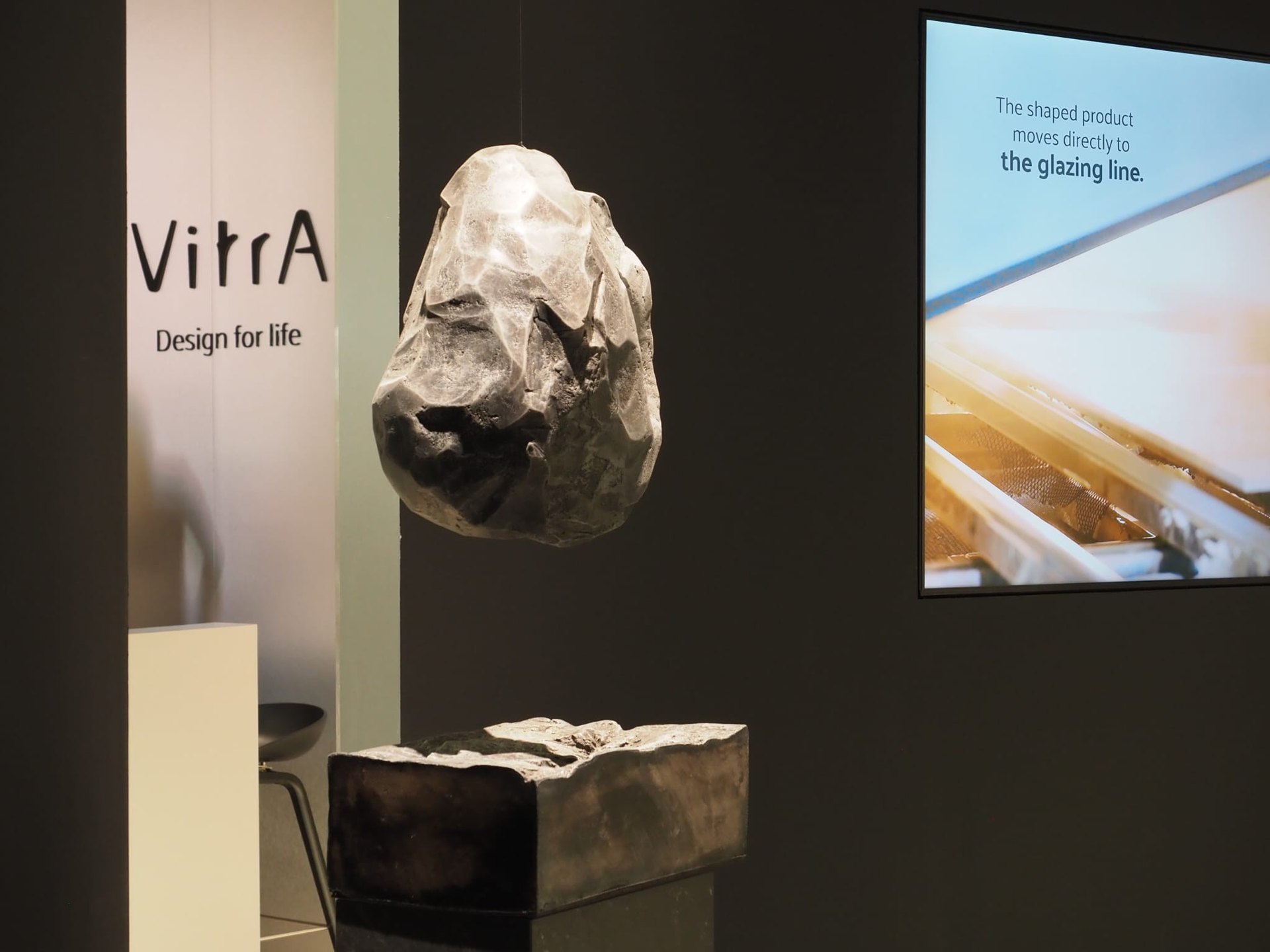
Three Design Dialects
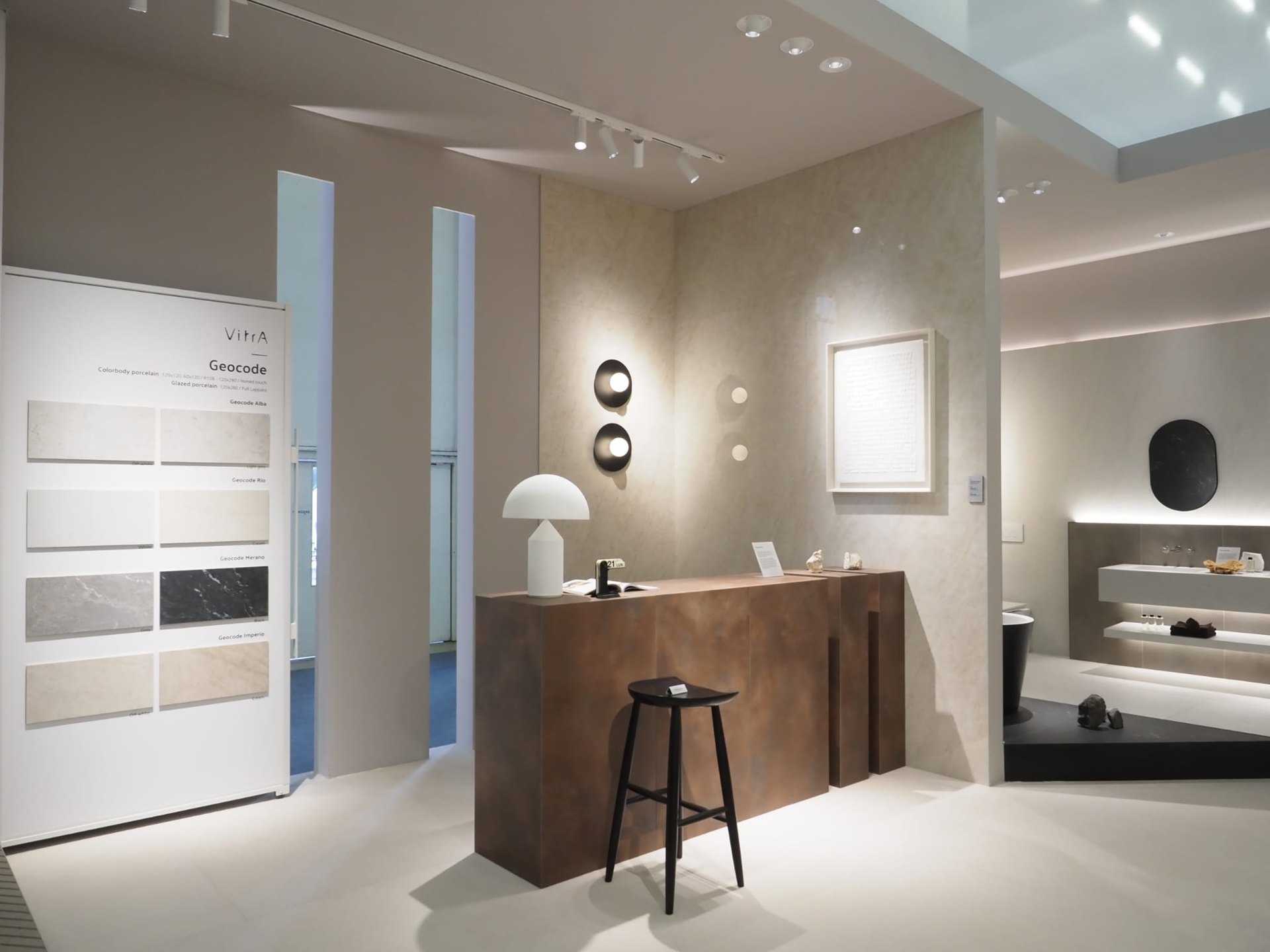
The Code concept rests on three design languages, and these gave rise to the Resincode, Geocode and Metacode collections. Anyone visiting Cersaie can find them where VitrA Tiles is exhibiting.
Resincode starts from the porous, mineral-rich feel of natural concrete, with its natural shifts in tone and a sense of surface layering, giving contemporary interiors a minimal, balanced and refined look. Geocode looks to Spanish limestone, marble, quartzite and gneiss, giving the varied geological heritage of natural stone a modern take on ceramic. There are four distinct surface types to pick from: Alba, Imperio, Rio and Merano. Metacode comes in three separate surfaces, in gold, iron and copper tones, and brings the soft glints and gentle changes of tone you get with patinated metal to ceramic, mixing an industrial feel with refined good looks.
What’s New on the Tech Side
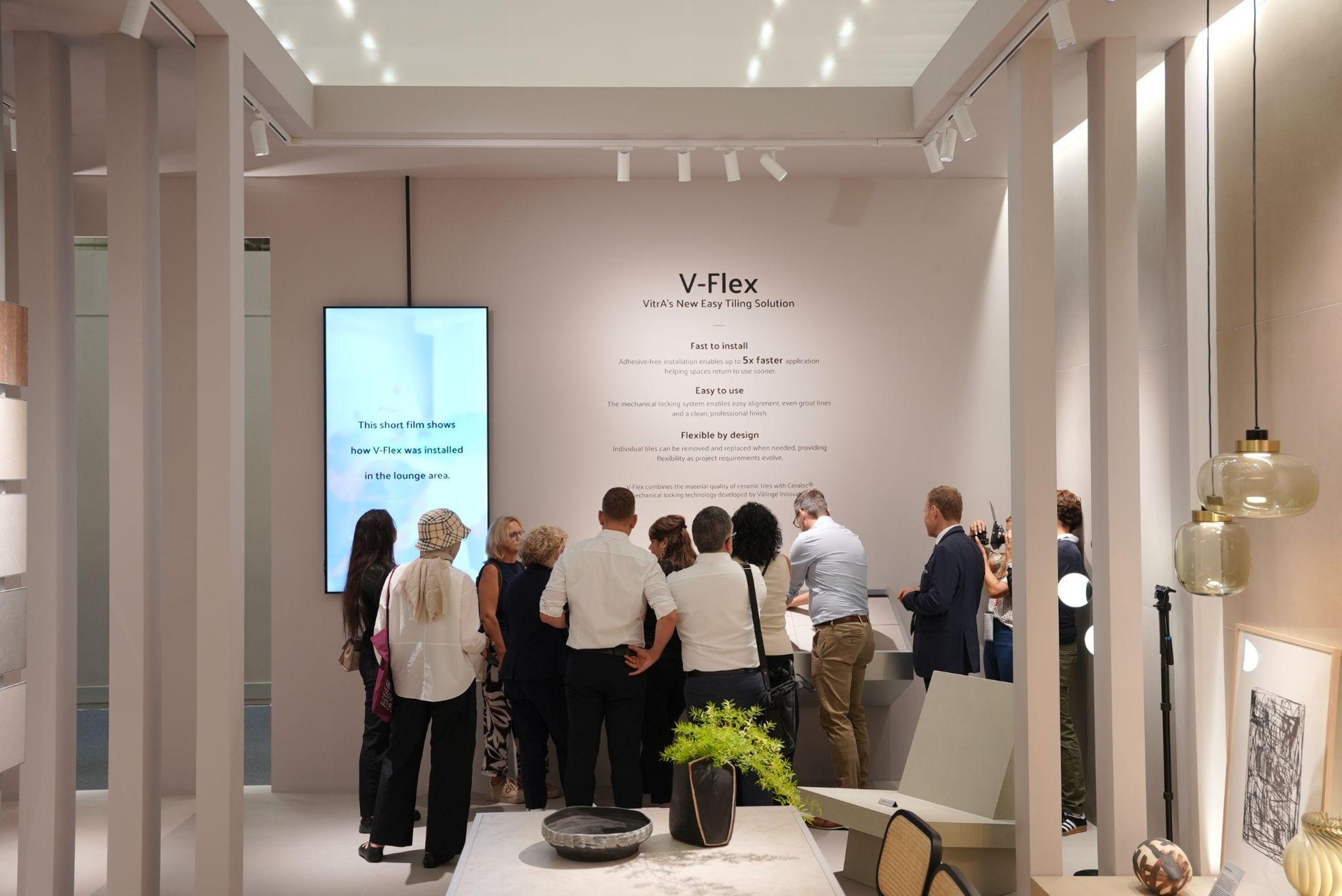
As well as the new collections, VitrA Tiles brought two innovations to Cersaie 2026: V-Flex and V-Tone.
V-Flex is a way of laying tiles without any adhesive, and it runs on Välinge’s Ceraloc® locking technology. Specially shaped side profiles let the tiles lock together mechanically, so the job can go as much as five times faster than with standard glued tiles. It helps you get precise alignment, even grout lines and a clean, professional finish. If a tile needs changing, it can be lifted out and swapped on its own, a big plus that makes maintenance and repairs far easier. On top of that, it makes rooms acoustically more comfortable. V-Flex is recommended for offices, hotels, showrooms, shops and store chains, educational facilities and commercial spaces.
V-Tone deals with differences in shade during ceramic production, keeping colour consistent and the design intact across different surfaces. Work to roll the V-Tone technology out across VitrA Tiles’ production lines is still going on.
More About VitrA Tiles
VitrA Tiles is home to the VitrA, Villeroy & Boch and engers brands, and is among the top ceramic tile exporters from Türkiye to the EU and elsewhere in Europe. The business was set up in 1991 in Tuzla, Istanbul, followed by Bozüyük, Bilecik in 1992, and now runs two production plants, employing about 2,000 people, with a capacity of 31 million m² a year. Its Bozüyük Plant has been recognised by the World Economic Forum’s Global Lighthouse Network for its digital transformation and Industry 4.0 efforts, and few tile factories anywhere are more advanced. By pairing advanced manufacturing with sustainability and top-class design, VitrA Tiles offers joined-up ceramic tile solutions that make living spaces better all over the world.
