


A cooperation agreement signed in London this month has drawn Turkish research on waste reduction and resource efficiency into the capital’s international climate calendar, ahead of the COP31 summit. The deal, agreed between The Zero Waste Foundation and London Climate Action Week, formalises exchange on zero waste and circular economy work between the two organisations and gives Türkiye’s research a direct link into the London-based network that brings together government, business, finance, academia and civil society during the annual event.
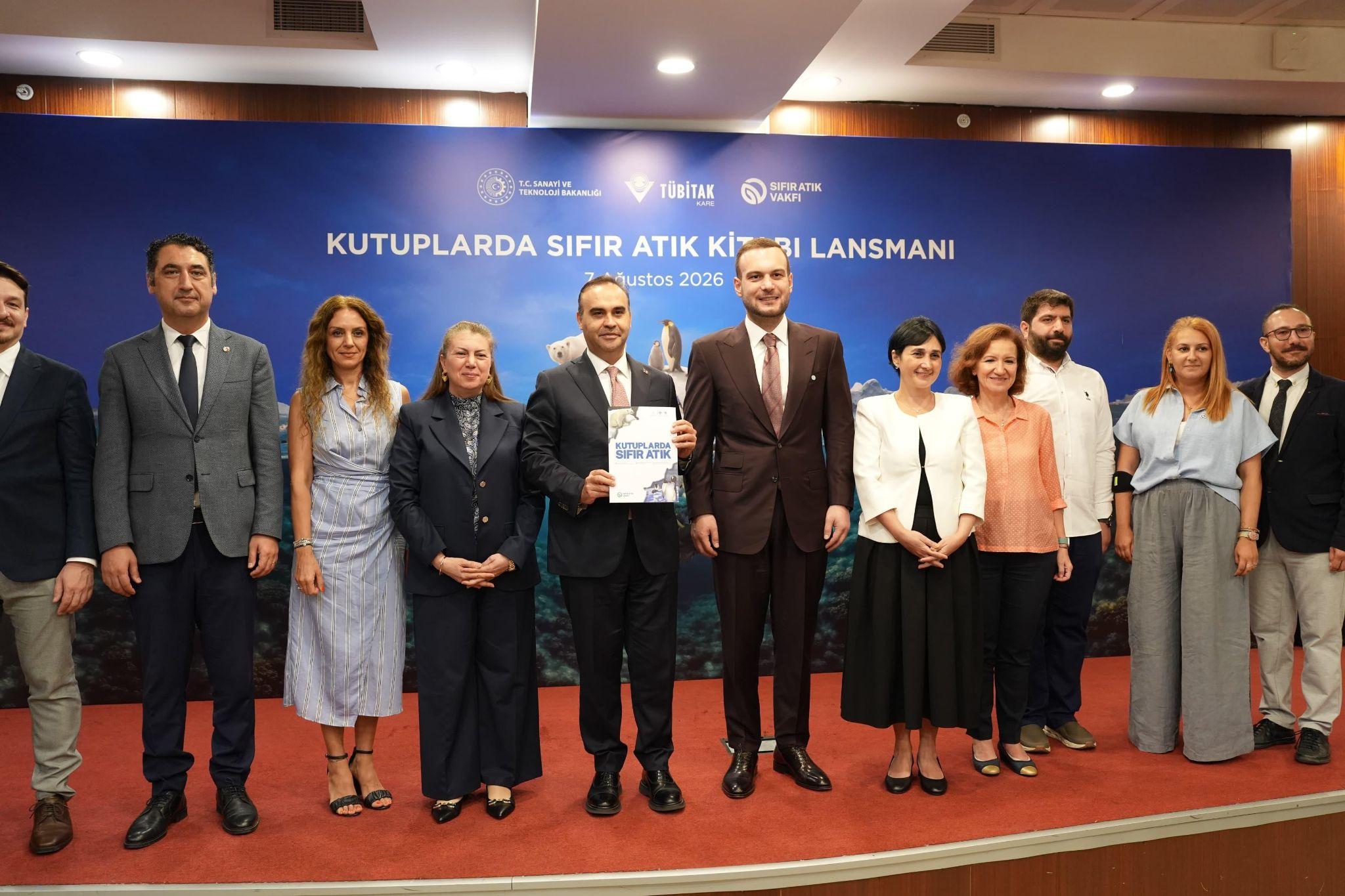
The protocol, signed on 17 August, followed the launch ten days earlier of a book examining how zero waste principles can be applied to scientific research carried out in the Arctic and Antarctic. Both developments form part of a wider push by Turkish institutions to connect environmental research with international climate diplomacy in the run-up to COP31, which Türkiye is due to host.
Book links polar fieldwork to waste reduction
The publication, titled “Zero Waste in the Polar Regions”, was prepared with TÜBİTAK’s Polar Research Institute, the Scientific and Technological Research Council of Türkiye. It draws on 18 articles written by scientists who have taken part in polar expeditions, covering the scientific, technical, administrative and communication aspects of applying zero waste methods in extreme environments.
Rather than focusing solely on how waste is collected during research trips, the book examines how expeditions are planned from the outset, how materials and resources are sourced and used, and how energy, water and logistics are managed throughout. The stated aim is to cut waste before it is created, use resources more efficiently and reduce the overall environmental footprint of scientific activity conducted in the polar regions.
The book presents the Arctic and Antarctic as key indicators of global climate change, arguing that environmental shifts recorded there carry implications well beyond the polar regions themselves. Mehmet Fatih Kacır, Türkiye’s Minister of Industry and Technology, said the publication brought together two initiatives that both began in 2017: the national Zero Waste movement and Turkish scientific expeditions to Antarctica and the Arctic.
“The Zero Waste initiative launched under the leadership of H.E. Emine Erdoğan has grown step by step from a national initiative into a global one,” he said. He added: “At the same time, we began organising scientific expeditions to Antarctica and the Arctic under the auspices of the President of the Republic of Türkiye, enabling Turkish scientists to strengthen the country’s presence in polar research. Through this book, these two initiatives have come together.”
The book is also described as reflecting the broader zero waste approach promoted by H.E. Emine Erdoğan, who founded the Zero Waste Movement, chairs the UN High-Level Advisory Board on Zero Waste, and holds the position of Honorary President of the Zero Waste Foundation.
Cooperation protocol opens door to joint events
Days after the book’s launch, attention turned to London, where the Zero Waste Foundation and London Climate Action Week signed their cooperation protocol covering climate action, zero waste and circular economy work. The agreement is intended to strengthen knowledge exchange, joint initiatives and international dialogue between the two bodies.
The document was signed by Samed Ağırbaş, President of the Zero Waste Foundation and a COP31 High-Level Climate Champion, alongside Climate Action Founder and CEO Nick Henry. Speaking after the signing, Ağırbaş said: “After this cooperation protocol, I hope we will carry out strong work and organize joint events at COP31 and London Climate Action Week.”
London Climate Action Week describes itself as bringing together representatives from government, cities, business, finance, academia, civil society and local communities each year. Through the new protocol, the Foundation’s zero waste and circular economy work now has a formal route into that network, ahead of further engagement expected around COP31.
Wider context ahead of COP31
Türkiye’s preparations to host COP31 provide the backdrop for both the book launch and the London agreement, though organisers say the immediate priority is practical, ongoing exchange between the Foundation and the LCAW network rather than a single set-piece event. Officials involved in the project say the intention is to keep zero waste discussions focused on planning, resource use and efficiency across research and other sectors, rather than narrowing the concept to recycling or waste disposal alone.
Taken together, the polar research book and the London protocol point to a deliberate effort to connect scientific fieldwork, resource management and circular economy principles with the kind of international climate networks that converge on London each year during Climate Action Week. For UK-based observers of the run-up to COP31, the agreement signals that Turkish zero waste initiatives, first developed at a national level from 2017 onwards, are now being positioned as part of a more international conversation, with London serving as one of the settings where that cooperation is being formalised.
No further joint events have yet been confirmed, but both signatories have indicated that additional collaboration is expected in the lead-up to COP31 and future editions of London Climate Action Week.